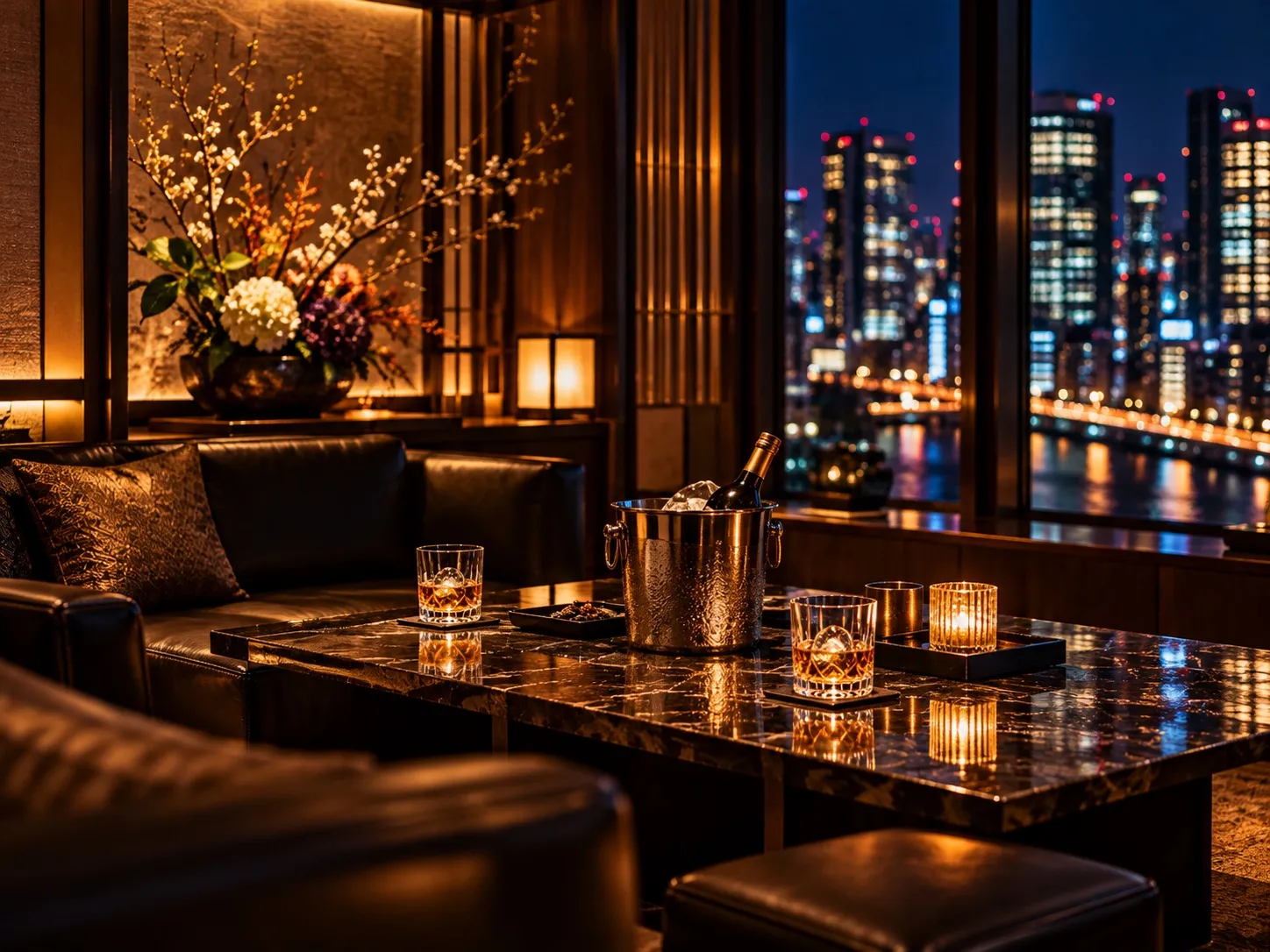
Hosting Clients at a Japanese Club or Lounge: A Planning Guide for Visiting Executives
In Japan, an evening out after dinner is still a common part of building a business relationship. If you are visiting from overseas and your Japanese counterparts have hosted you, you may want to return the gesture. If you are hosting Japanese clients, an evening at a well-chosen club can matter more than the meeting earlier in the day.
The risk for a visiting host is not the cost. It is choosing the wrong kind of venue, arriving without a booking, or making the payment awkward in front of your guests. This guide covers the decisions to make before the night.
Choose the right kind of venue
| Type | Typical setting | Suited to |
|---|---|---|
| High-end club (クラブ) | Ginza in Tokyo, Kitashinchi in Osaka. Quiet, formal, experienced hostesses who hold conversation with senior guests. | Senior clients, important relationships, conversation-focused evenings |
| Lounge (ラウンジ) | Smaller and more relaxed than a club, often in the same districts. | Mid-level teams, a second stop after dinner |
| Kyabakura (キャバクラ) | Livelier, younger staff, time-based pricing. Roppongi, Kabukicho, Namba. | Informal groups who know each other well |
For a first evening with a senior client, a club or lounge in Ginza or Kitashinchi is the conventional choice. Many high-end clubs accept new guests only by introduction or reservation, which is one reason to plan ahead.
Book ahead and share the details
Arriving with a group and no booking at a high-end club is the most common mistake. Book at least a few days in advance, and give the venue:
- the date and arrival time, and roughly how long you plan to stay
- the number of guests, and the seniority of the most senior guest
- the language your guests speak
- whether you need a private room or a quiet table
- your budget per person, so the venue can plan bottles and drinks around it
Set the budget before the night
At a club, the per-person total is driven by bottles and the service charge as much as by the table charge. Agree a budget in advance, and tell the venue what it is so that drinks are ordered within it. Use the bill estimator with the venue’s price list to see how the service charge changes the total.
Hosting a mixed group of your own team and clients means you are paying for everyone at the table, including the hostesses’ drinks. Plan the budget on the full head count.
Handle the payment out of sight
In Japanese business culture, the host settles the bill without the guests seeing the amount. Arrange this before the evening:
- Tell the venue in advance that you will pay, and how.
- Settle the bill with a staff member away from the table, or arrange for card payment to be prepared before the end of the evening.
- Ask for an itemised receipt and a formal receipt (ryōshūsho) made out to your company. See etiquette and receipts.
Tipping is not customary in Japan, and offering cash to staff can cause confusion. The service charge on the bill covers service.
Plan the evening as a sequence
A typical evening is dinner first, then a club or lounge as the second stop (nijikai). Our guide to settai and nijikai explains how these evenings work. Booking the second venue close to the restaurant keeps the group together. Arrange taxis for senior guests at the end of the night, and let them leave first.
How we help
We can suggest venues that suit your guests, confirm the price structure and booking conditions in advance, and pass your requirements to the venue. Message us with the city, date, number of guests and budget.
Planning a client evening in Tokyo or Osaka?
Tell us the city, date, group size and budget. We reply on WhatsApp with options and the full price structure before you go. There is no fee for you.